Pages

Wednesday, August 5, 2015

Larry Ferlazzo's Websites of the Day... - 6 new articles

Click here to read this mailing online.

Your email updates, powered by FeedBlitz

Here are the latest updates for woowonenature@gmail.com

  1. This Sounds Weird: PISA To Measure Student Ability To Collaborate By Pairing Them Up Anonymously Online
  2. Congratulations To Edublogs – They’re Ten Years Old!
  3. Yes, Schools Should Develop Active Citizens &, No, We Don’t Need Another Test To Do It
  4. SAS Curriculum Pathways, Just About The Best Online Ed Site, Has Gotten Even Better…
  5. Anne Frank & Her Family Were Arrested On This Day In 1944 – Here Are Related Resources
  6. Video: “If You’re Taking Youth For Granted, Try This Instant-Aging Suit”
  7. More Recent Articles
  8. Search Larry Ferlazzo's Websites of the Day...
  9. Prior Mailing Archive

This Sounds Weird: PISA To Measure Student Ability To Collaborate By Pairing Them Up Anonymously Online

This fall, the Program for International Student Assessment (PISA) examination is going to begin to measure students’ ability to collaborate by pairing them up anonymously during the test to solve a problem (see Is Your Child a “Group Problem Solver?” The PISA Test Will Decide).

Here are a few (unconnected) excerpts from that Scientific American article:

Instead of short-answer questions or lengthier explanations, the test taker will record outcomes of games, solve jigsaw puzzles and perform experiments with the help of a virtual partner that the test taker can communicate with by typing in a chat box.

Jenny Bradshaw, senior PISA project manager, who oversees the test: "Working with unseen partners, especially online, will become a bedrock skill for career success. Increasingly, this is the way the workplace and the world will function."

Plenty of critics say the new domains are a blunder. "Is there an independent set of skills—in this case, collaborative problem solving—that is transferable across domains of knowledge?" asks Tom Loveless, an education researcher at the Brookings Institution. "Is problem solving between two biologists the same as problem solving between two historians? Or is it different? Progressive educators since John Dewey have insisted it is the same, but we just don’t know that."

School systems that want to prepare students for the future should help them achieve mastery of complex math, science and literacy instead of putting resources into promoting nebulous concepts.

It seem pretty ironic that PISA is measuring social skills and NAEP is going to measure grit at the very same time leading researchers in the field of Social Emotional Learning are saying valid testing procedures for these qualities don’t exist.

No wonder PISA is being criticized by so many education experts (scroll down when you get that link).


Sponsor message
powered byad choices

Congratulations To Edublogs – They’re Ten Years Old!

edublogs11

Congratulations to Edublogs, the wonderful platform that hosts this blog, and a zillion other ones. This month is their tenth anniversary (and they’re giving away a lot of free stuff)!

They also unveiled a new website design today, which looks great!

I still can’t imagine why any educator would choose a different place to host a blog — Edublogs is simple to use, free or very low-cost to use, and offers great customer service.

If you want to learn more about blogging, you can find more info at:

The Best Sources For Advice On Student Blogging

The Best Sources Of Advice For Teachers (And Others!) On How To Be Better Bloggers


Yes, Schools Should Develop Active Citizens &, No, We Don’t Need Another Test To Do It

There has been a recent movement to making passing a version of the U.S. citizenship test a requirement for high school graduation, and The New Yorker has just written about it (see What's the Right Way to Teach Civics?).

Considering my nineteen year career as a community organizer, it’s no surprise that I’m a big believer in schools helping to develop the citizenship skills of our students. However, I think making students having to study and pass yet another standardized test is a terrible, and ineffective, strategy to use in trying to achieve that goal. It’s like calling into Talk Radio – it makes some feel like they’re doing something to make a difference when, in fact, they’re doing nothing at all.

When I was organizing for the Industrial Areas Foundation, we organized massive naturalization drives which we called the Active Citizenship Campaign (both Presidents Clinton and Obama later borrowed the term) to make it clear that passing the test was one kind of citizenship, but active citizenship – participating actively in public life – was the real kind of citizenship our country needed.

What would this kind of active citizenship look like in schools?

I wrote extensively about it in a New York Times column, Ideas for English Language Learners | What Does It Mean to Be a Citizen?, which is full of lesson ideas applicable to ELLs and non-ELLs alike.

In addition, here’s a modified excerpt from my book, English Language Learners: Teaching Strategies That Work that shares how I make the distinction:

Over a period of two months the class had been concentrating on two different "threads" related to U.S. citizenship. One concentrated on preparation for the official test – students studied the workbook, practiced dictation, used online activities for reinforcement. The other explored what an "active" citizen might look like. That primarily included students doing individual meetings in the school and neighborhood to identify community concerns. Those conversations led to student-led forum at the school with with job training agencies and hundreds of students and adults from the area.

Then, the class reviewed the different activities that were done for each of the two threads and completed a graphic organizer. Next, the class brainstormed answers to the questions:

• What is a good citizen?

• What does a good citizen know?

• What does a good citizen do?

Finally, each student wrote which thread they thought helped prepare them the most to become what they defined as a good citizen and why. Students had different perspectives:

• Toua: "A good citizen is someone who know about their native history, good helper, work hard, and know about the laws in their country….I think studying for the citizenship test help me prepare to be a good citizen more than community organizing because when you learn about the constitution and history you might be a good citizen and leader."

• Pao: "A good citizen is someone who helps the community and makes the community better…I think community organizing helped me prepare to be a good citizen more than studying for the citizenship text because I learn how to solve the community's problems and I know how to help the community."

• Chi: "A good citizen is someone who know a lot about country and history…I think being an active citizen and community organizing helped me prepare to be a good citizen more than studying for the citizen test because it helped me know my family member, friends, neighbors, jobs and learned about power."

• Mai Tong: "A good citizen is someone who knows about governments and history…I think active citizen and community organizing helped me be a good citizen more than studying for the text, this is because a good citizen need to know how to organize and have community service. This also help me to practice speak English for many people and feel confident."

I’ll end this post with an excerpt from The New Yorker article:
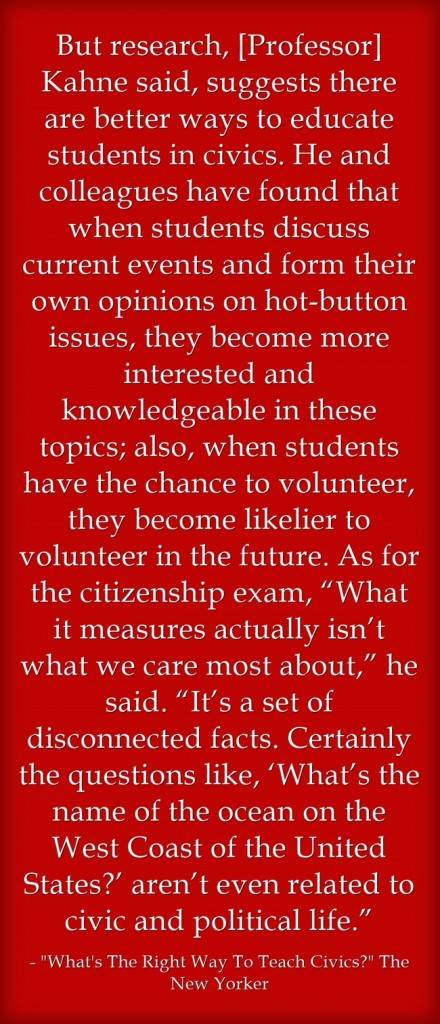
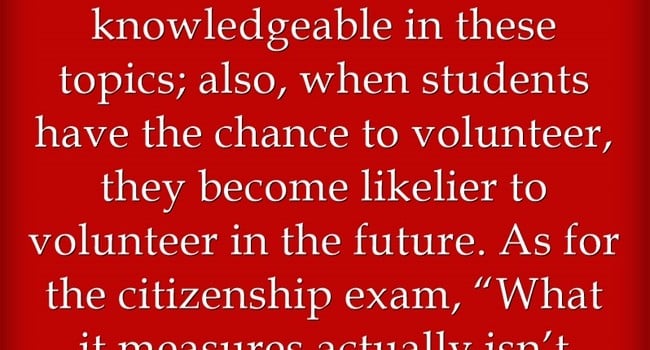
But-research-Professor

I’m adding this post to The Best Websites For Learning About Civic Participation & Citizenship.


Sponsor message
powered byad choices

SAS Curriculum Pathways, Just About The Best Online Ed Site, Has Gotten Even Better…

sassas

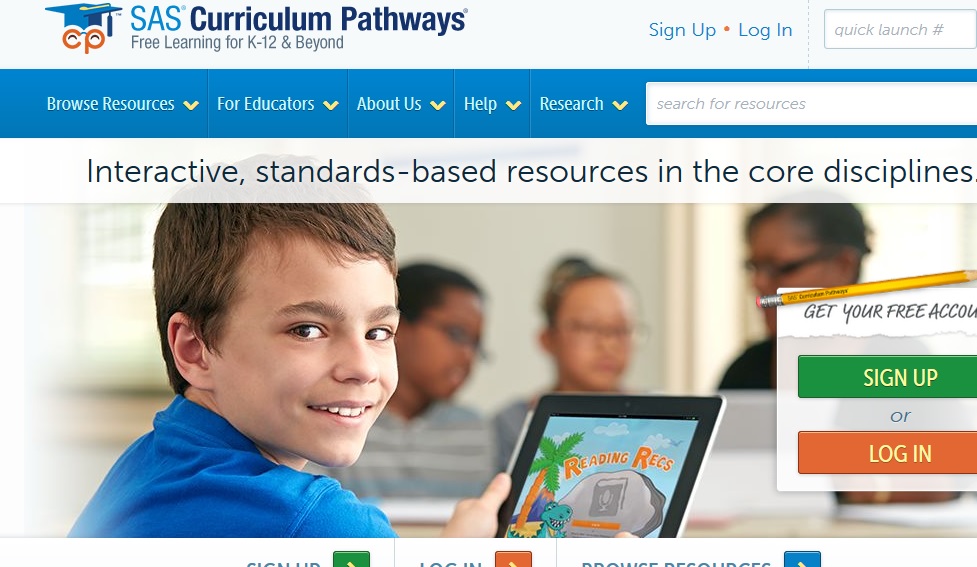
I’ve previously written a lot about how much I like SAS Curriculum Pathways, a free site with tons of interactive lessons that students can complete and then email to their teacher.

It’s just gotten even better….

One, today they unveiled a big upgrade to the design of their site, and it looks great.

Secondly, they have a nice new feature called Explore Primary Sources, which provides lots of creative lessons for students to access…primary sources.


Anne Frank & Her Family Were Arrested On This Day In 1944 – Here Are Related Resources

Anne Frank and her family were arrested on this day in 1944.

You might be interested in The Best Sites To Learn About Anne Frank.


Sponsor message
powered byad choices

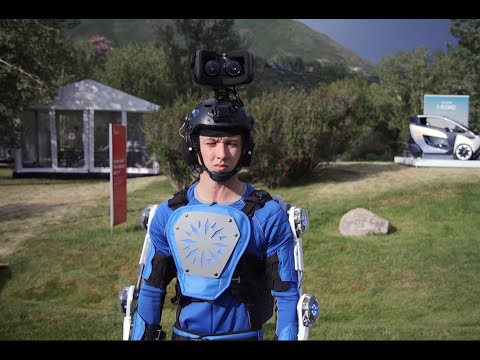
Video: “If You’re Taking Youth For Granted, Try This Instant-Aging Suit”

I’m adding this video from The Atlantic to The Best Sites For Walking In Someone Else's Shoes:


More Recent Articles


Sponsor message
powered byad choices
You Might Like


Email subscriptions powered by FeedBlitz, LLC, 365 Boston Post Rd, Suite 123, Sudbury, MA 01776, USA.

No comments:

Post a Comment