Pages

Tuesday, August 4, 2015

Larry Ferlazzo's Websites of the Day... - 6 new articles

Click here to read this mailing online.

Your email updates, powered by FeedBlitz

Here are the latest updates for woowonenature@gmail.com

  1. Statistic Of The Day: What Character Strengths Predict Well-Being?
  2. “Q & A Collections: Project-Based Learning”
  3. August’s Infographics & Interactives Galore – Part One
  4. Is Exploration Good?
  5. Video: “What Do Countries Fear The Most?”
  6. Quote Of The Day: “How To Tell A Great Story”
  7. More Recent Articles
  8. Search Larry Ferlazzo's Websites of the Day...
  9. Prior Mailing Archive

Statistic Of The Day: What Character Strengths Predict Well-Being?

Which Character Strengths are Most Predictive of Well-Being? is an article in today’s Scientific American, and is written by Scott Barry Kaufman.

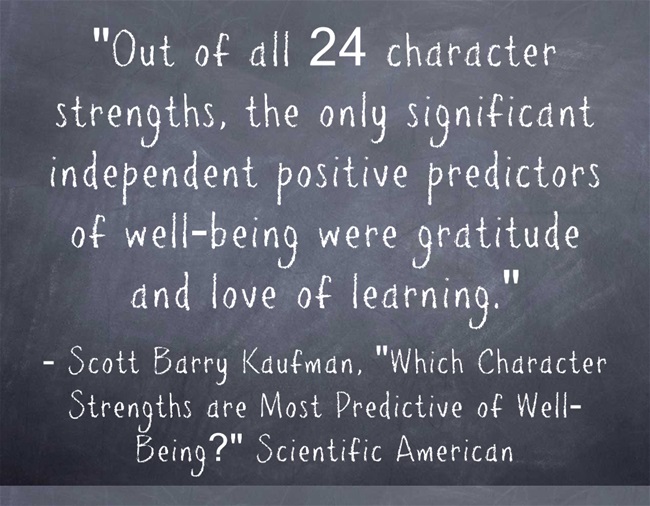
He does a pretty interesting, and what appears to be an apparently thorough, analysis of a number of studies. He comes to this conclusion:

Out-of-all-24-character

He does add an asterisk, though:

Note that love, honesty, and humor were very close to being statistically significant independent positive predictors of well-being.

He also shares a link to something called The Character Strengths Survey that you can take.

I’m adding this post to The Best Social Emotional Learning (SEL) Resources.


Sponsor message
powered byad choices

“Q & A Collections: Project-Based Learning”

Q & A Collections: Project-Based Learning is my latest Ed Week Teacher column.

It brings together all my posts from the past four years on Project-Based Learning – in one place!

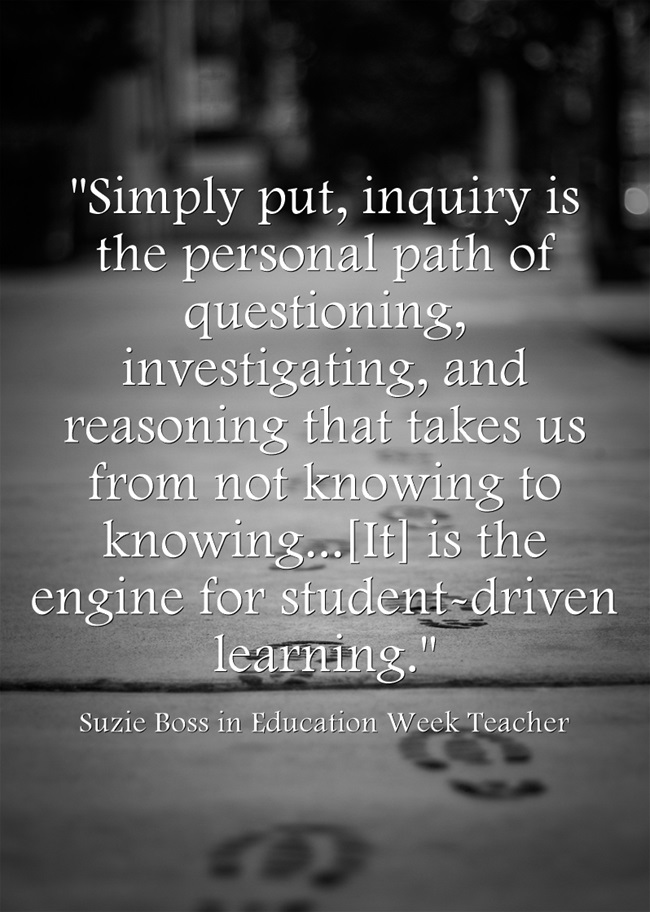
Here’s an excerpt from one of them:

Simply-put-inquiry-is22gggg

I’m adding the column to The Best Ideas For Cooperative Learning.


August’s Infographics & Interactives Galore – Part One

There are just so many good infographics and interactives out there that I've begun a semi-regular feature called "Infographics & Interactives Galore."

You can see others at A Collection Of "The Best…" Lists On Infographics and by searching "infographics" on this blog.

I'll still be publishing separate posts to individually highlight especially useful infographics and interactives, but you'll find others in this regular feature.

Here goes:

What Did The Earth Look Like? is a neat interactive which shows 3D images of the earth at different points in its history – ranging back to 600 million years ago? Thanks to Google Maps Mania for the tip.

Writing Systems and Scripts of the World shows a map of the world and displays the writing systems practiced in those areas. I’m adding it to The Best "Language Maps."

Child Poverty Down for Whites, Asians, Hispanics, But Steady for Blacks is from NBC News and has an interactive from Pew. I’m adding it to The Best Visualizations Of Poverty In The U.S. & Around The World.

This map shows how red states increase inequality and blue states cut it is from Vox. I’m adding it to The Best Resources About Wealth & Income Inequality.

Visualizing Africa’s Progress in Health, Food Provision, Political Freedom, Poverty and Education is from Our World In Data.

Alien Deep is an interactive from The National Geographic Channel. I’m adding it to The Best Sites For Learning About The World's Oceans.

Even Graphics Can Speak With a Foreign Accent is from National Geographic. I’m adding it to The Best Sites For Learning About The World's Different Cultures.

I’m adding these next two infographics to the same list:

Around The World In 30 Unique Modes of Transport
Flags of the World: The Stories Behind Them
    

Sponsor message
powered byad choices

Is Exploration Good?

In my ELL World History class, I have students consider the idea of exploration and how it pertains to their lives.

Today, the online magazine Aeon published a meandering essay that sort of takes an unusual position on the idea of exploration – a somewhat negative one.

I wouldn’t ask students to read the whole thing because of language challenges and because, as I mentioned, it’s quite meandering, but I am going to have them read this excerpt:

Take the example of an imaginary tribe of people, faced with choosing a spot in a varied landscape to settle. There are likely to be some places where the group will certainly die, some where they will thrive, and a large number of places that are in-between. Having some people in the group who want to explore is useful because, while most of them will not make it, some will return with fresh information about the best places to live.

The key, though, is that there must also be people who don't want to ramble, who turn their talents and energies to exploiting, to the best of their abilities, the place where they have settled. If there are too many explorers, the group is likely to starve. 'There's a tension between those two,' Shaw says, between explore and exploit. The right mixture of both will make the group more likely to find a better-than-average place to settle and make the best use of it. The explore-exploit dilemma is from game theory, not anthropology. It doesn't describe what has necessarily happened: it's just the most efficient route to the best outcome for a group. But it is the kind of thing that might have been generated under evolutionary pressure, and it helps to put a frame around the urge for going.

'It's key to realise that the most functional systems are the ones that have a variation,' Shaw remarks. 'A good society would be better at letting people know that there is a variation.'

I’d be interested in hearing how other teachers approach the idea of “exploration.”


Video: “What Do Countries Fear The Most?”


Sponsor message
powered byad choices

Quote Of The Day: “How To Tell A Great Story”

I’m always trying to get my students, particularly ones in my IB Theory of Knowledge classes, to tell stories in their presentations. I have them review a lot of resources at The Best Digital (& Non-Digital) Storytelling Resources about this very topic.

The Harvard Business Review has a useful article titled How To Tell A Great Story.

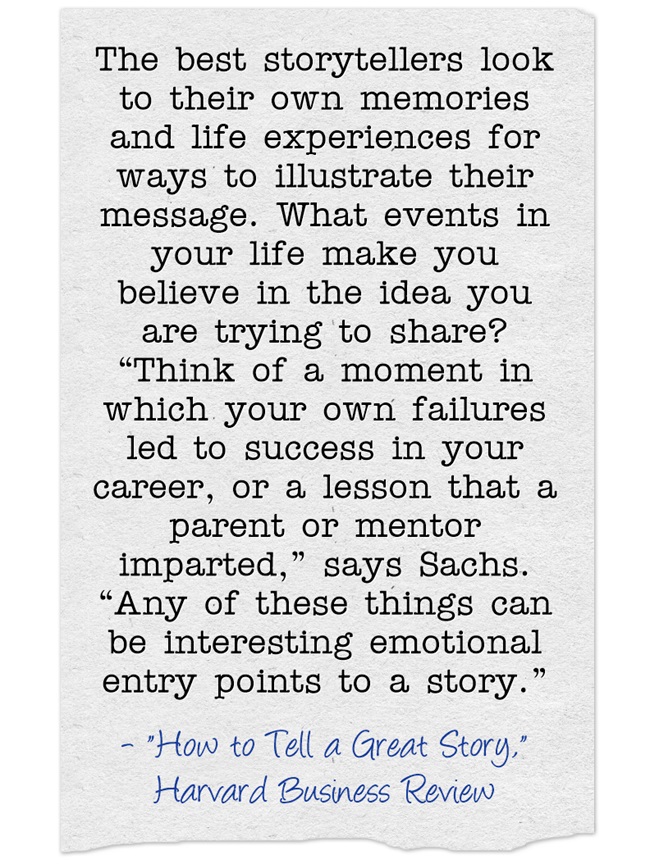
Here’s an excerpt:

The-best-storytellers


More Recent Articles


Sponsor message
powered byad choices
You Might Like


Email subscriptions powered by FeedBlitz, LLC, 365 Boston Post Rd, Suite 123, Sudbury, MA 01776, USA.

No comments:

Post a Comment